Watch the official film, then examine control, continuity, and sound separately. A published demo shows an example; it does not establish the result of every future session.
Watch the official launch film
The film below is published by Google DeepMind. It loads only after you choose to watch it. You can also open the original on YouTube.
Loads a YouTube player. Playback and cookies are controlled by YouTube.
For a first pass, watch without pausing. On a second pass, look for the moment an instruction is entered and the moment the environment changes. Distinguishing those moments is more useful than judging a model from one attractive frame.
A scene with sound and a subject
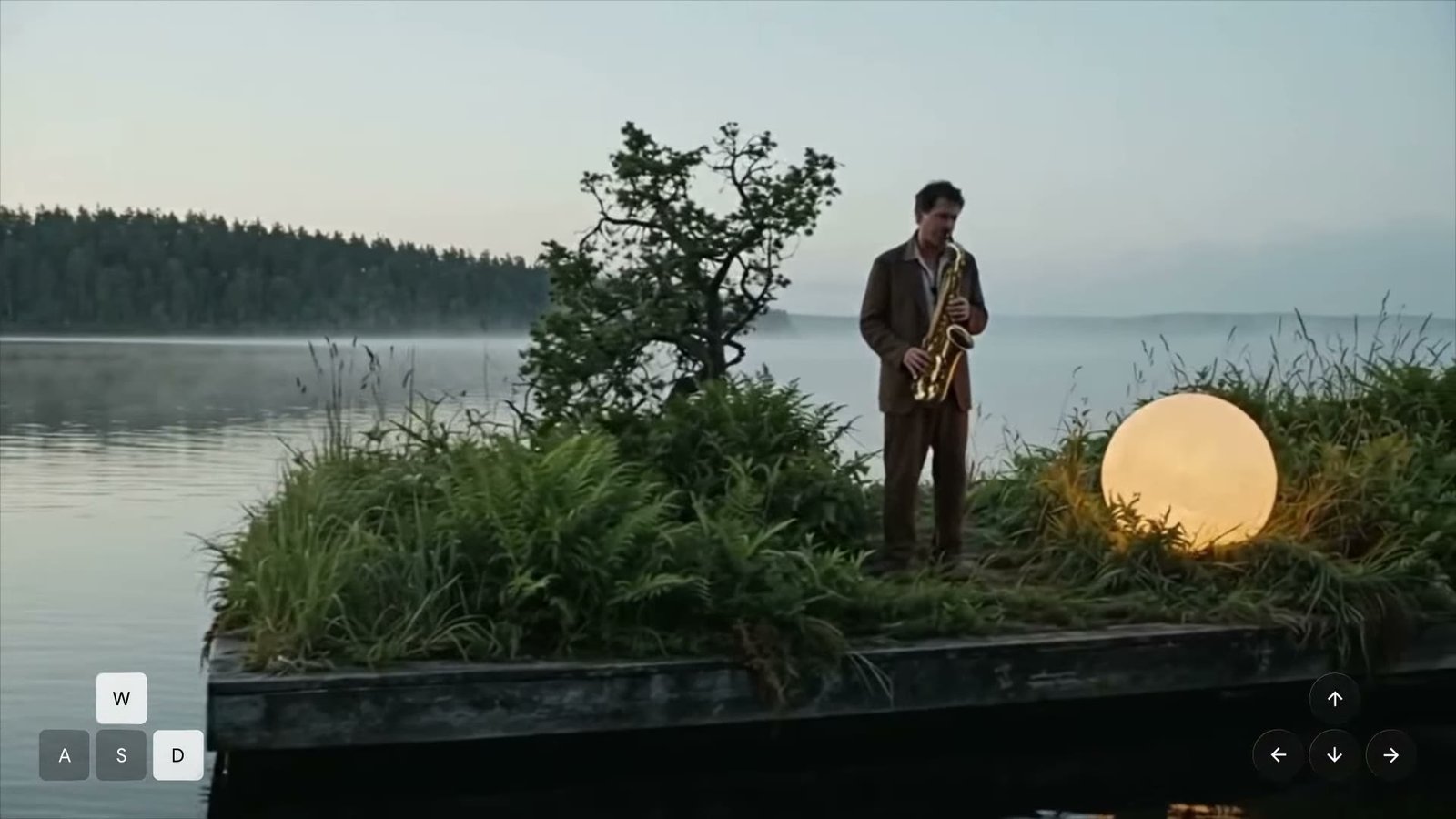
This still shows the musician-on-an-island demonstration. It helps identify the subject, setting, and visible navigation overlay. A still cannot demonstrate whether sound remains synchronized, so listen to the original clip before drawing conclusions about audio quality.
Our viewing exercise: name one landmark and one character detail, then watch whether they stay recognizable after movement or an edit. Do not assume a camera cut means a continuous test.
A deliberately stylized environment
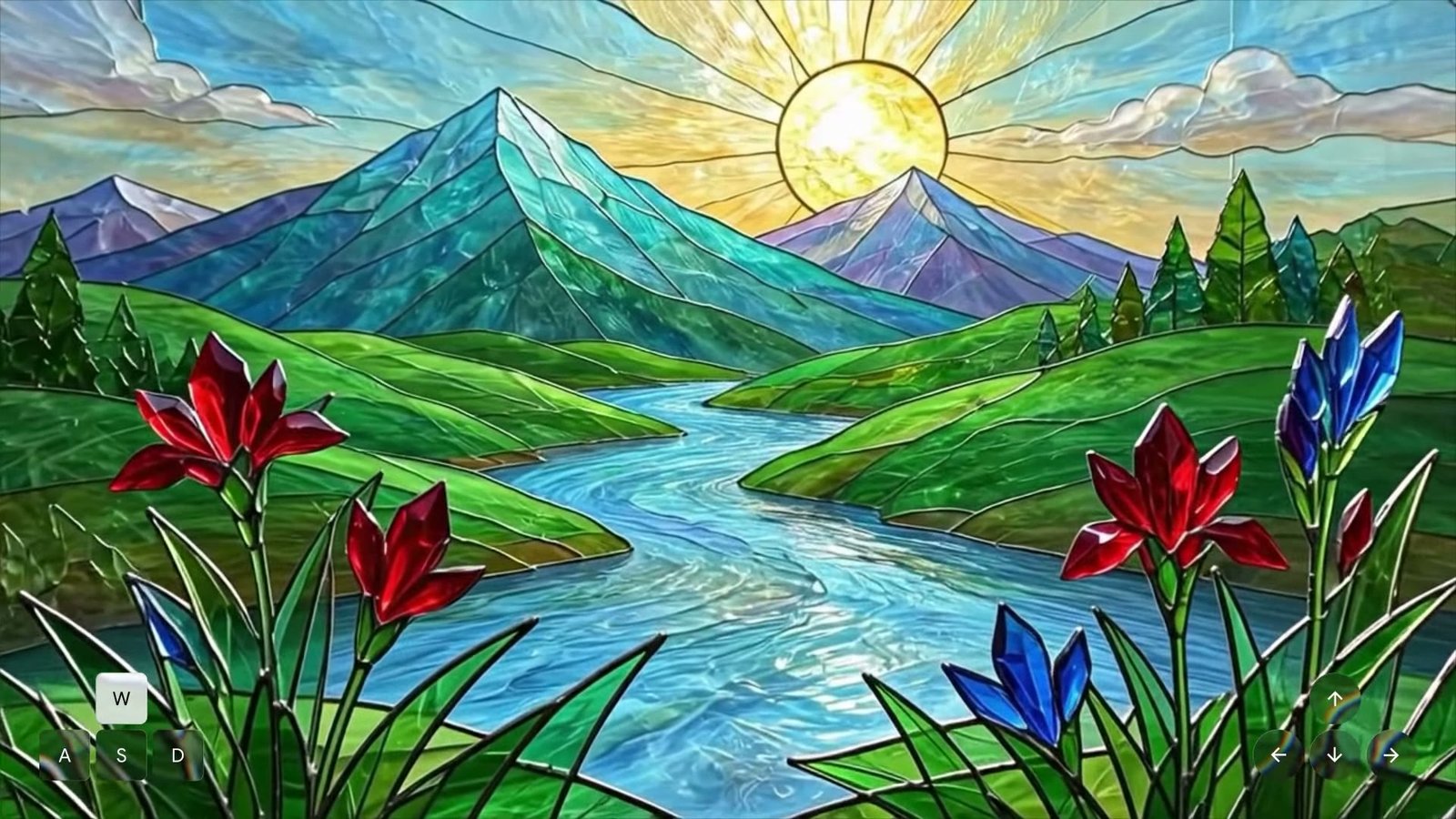
The stained-glass example is useful for thinking about art direction. Look at whether the river, flowers, and mountains maintain a common material style. A photorealism test and a style-consistency test ask different questions.
For your own evaluation, choose one style constraint and one movement. For example: glass-like surfaces while traveling along a river. Avoid adding five new requirements before checking the first result.
A five-question demo checklist
- Control: can you see what the person asked or pressed?
- Response: is the result visibly related to that instruction?
- Continuity: do subjects and landmarks persist when revisited?
- Sound: does the audio match the setting and events?
- Evidence: is this an official recording, an independent test, or an edited compilation?
These questions are our suggested evaluation method, not a benchmark score. A compelling demonstration can be useful for ideation while still being insufficient for a production decision.
What a demo does not promise
A clip does not establish universal session length, a frame rate for every user, exportable game assets, or public API access. For a project decision, write down what you need to deliver: a video, a controllable prototype, or an editable game. Then ask for evidence of that exact output.
Our suggested next step is a tiny acceptance test: one scene, one intervention, one saved observation. Record both the successful and failed attempts. This gives a team something more useful than a single highlight reel.
Sources & method
Checked against the official sources below on 30 October 2026. Screenshots document public pages or official demos. We have not claimed firsthand Genie 4 access; suggested exercises, examples, and decision checklists are our editorial guidance.
Access, product limits, and eligibility can change. Follow the current message in Google’s product and its published terms.